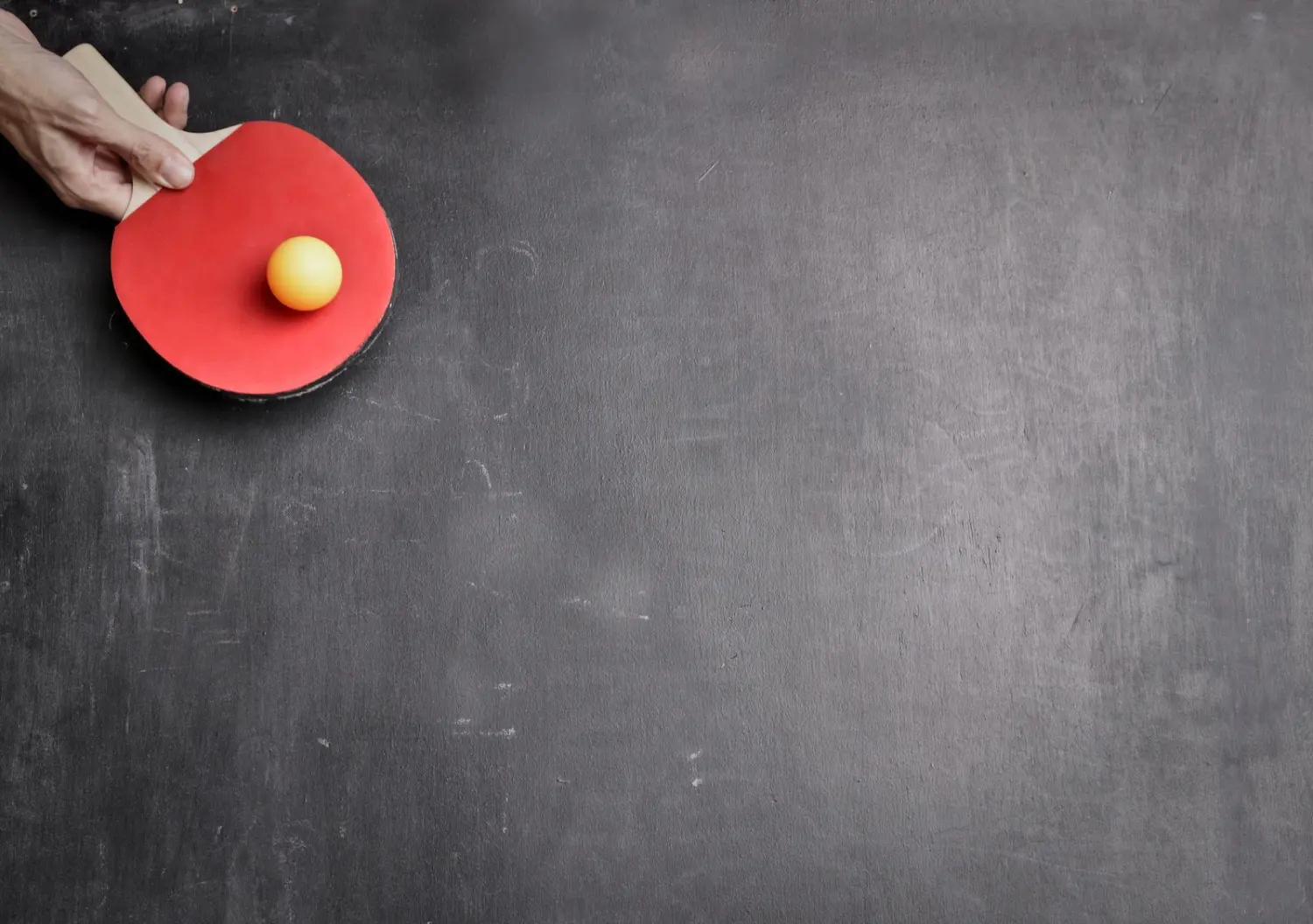
The rubber on your bat does more to shape your game than the blade underneath it. It decides how much spin you can put on the ball, how much the opponent's spin affects you, and whether your natural game is to attack, block or defend. Pick the wrong type and you spend every match fighting your own equipment.
This guide explains the main table tennis rubber types, inverted and the family of pimpled rubbers, plus anti-spin and the sponge underneath. It covers how each one plays, what it is good and bad at, and how to choose the right one for your style.
What a table tennis rubber actually is
A match rubber has two layers glued together: a thin topsheet of rubber on the surface, and a layer of sponge between the topsheet and the blade. The topsheet is moulded with small pimples (also called pips) on one side.
Which way those pimples face is what separates the two big families. Turn the pimples inward, against the sponge, and the smooth side faces out: that is an inverted rubber. Leave the pimples facing outward, so they are the surface that strikes the ball, and you have a pimpled or pips-out rubber. Everything else about how a rubber plays follows from that one choice.
Inverted (smooth) rubber
Inverted rubber has its pimples pointing inward, so a smooth, tacky surface meets the ball. That large contact area grips the ball and is what lets you generate spin, more of it than any other type. It is by far the most common rubber and the default for attacking and all-round play.
Because it both produces spin and is sensitive to the opponent's spin, inverted rewards good technique: you can loop, drive and serve with heavy spin, but you also have to read and adjust to what is coming back. Nearly every beginner starts here, and most players never need anything else.
- Best for: attacking and all-round players, and anyone learning the game.
- Strengths: the most spin, on serves, loops and drives, with good control.
- Trade-off: it takes the opponent's spin too, so it demands the most touch and reading.
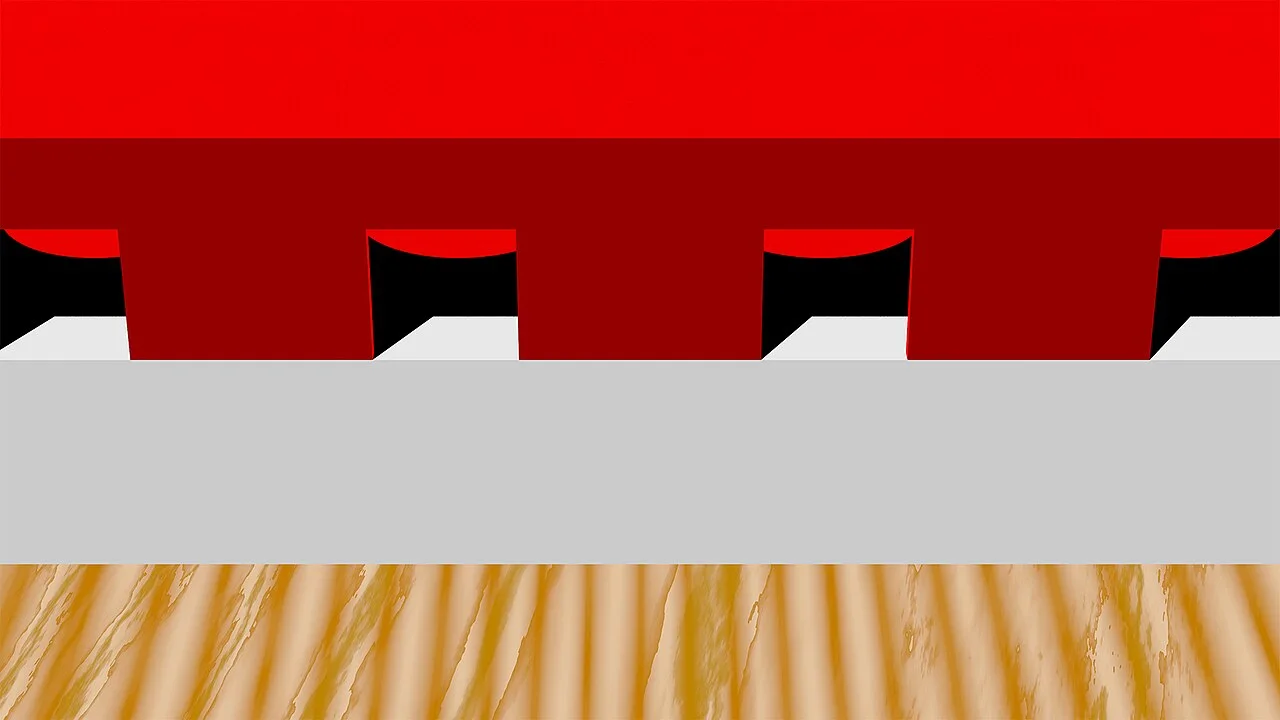
Short pips (pips-out)
Short pips have squat pimples facing outward. With less surface gripping the ball, they grab it less, so they produce less spin of their own but are also far less affected by the opponent's spin. The ball comes off flatter and quicker, what players call hitting 'through the ball'.
This suits a direct, fast game: hitting and blocking close to the table, taking the ball early, and not having to fuss over incoming spin. The cost is that you cannot loop with the heavy topspin an inverted rubber gives you.
- Best for: fast hitters and close-to-the-table blockers who want a flat, quick ball.
- Strengths: less affected by the opponent's spin; punchy hitting and blocking.
- Trade-off: much less spin of your own, so looping and spinny serves are harder.
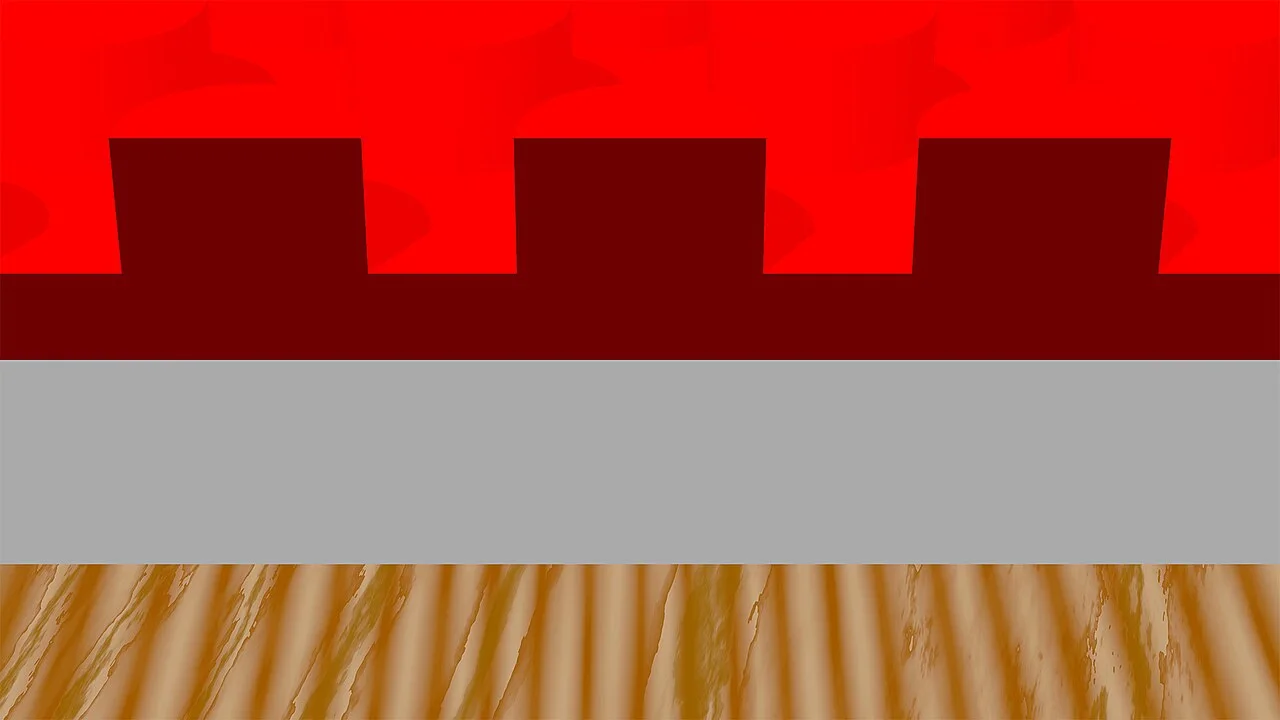
Long pips (pips-out)
Long pips have tall, thin pimples that bend over when they hit the ball. Instead of creating new spin, they fold and return the opponent's spin back at them, so the more spin you send into long pips, the more comes back. The result is a wobbly, awkward, often slow ball that does not behave the way an inverted rubber would.
Defenders and choppers love them, as do disruptive blockers who want to upset an attacker's rhythm. The flip side is that long pips are hard to attack with directly, because you are mostly reflecting spin rather than making it, so beginners find them confusing to use and to play against.
- Best for: defenders, choppers and disruptive blockers who want to return spin and unsettle attackers.
- Strengths: reverses the opponent's spin, producing a wobbly, hard-to-read ball.
- Trade-off: very hard to attack with; a steep learning curve at both ends.
Anti-spin and a word on medium pips
Anti-spin looks like an inverted rubber, smooth side out, but the surface is deliberately low-friction. Rather than grip the ball, it deadens almost all spin, so incoming spin dies and the return floats back slow and dead. It is a niche, disruptive and defensive choice, used to neutralise a heavy-spin attacker rather than to start the attack yourself.
Medium pips sit between short and long pips and are uncommon. Most players never need to think about them; if short and long pips are the ends of the scale, medium pips are a rarely chosen point in the middle.
The sponge underneath
Under the topsheet sits the sponge, and its thickness is a speed-versus-control dial. A thicker sponge stores and returns more energy, giving you more speed and spin potential but less feel. A thinner sponge gives you less power and more control over where the ball goes.
There is no single right answer; it follows your level and your game.
- Thicker sponge: more speed and spin, less control. Suits confident attackers.
- Thinner sponge: more control and touch, less speed. Suits beginners and control players.
- Long pips are often paired with a thin sponge, or none at all, to maximise their disruptive, spin-reversing effect.
How to choose, and the colour rule
Equipment is personal, and the only real test is hitting with it, so try before you commit. That said, a few starting points cover almost everyone.
One rule is not a matter of taste. Under ITTF rules a bat must have one bright-red side and one black side, so your opponent can always see which rubber you are about to use. You cannot hide long pips by matching them to your inverted side.
- Beginners: inverted on both sides. Learning to read and produce spin on inverted is the foundation for everything else.
- Attackers: inverted, with sponge thickness to taste; the heavy spin of an inverted rubber is what powers loops and drives.
- Defenders and choppers: many use inverted on one side and long pips on the other, switching by twiddling the bat to vary what the ball does.
- Disruptive close-to-table players: short pips for flat, quick hitting, or long pips to return spin and break up rhythm.
Common questions
What rubber should a beginner use?
Inverted rubber on both sides. It grips the ball and generates the most spin, so it is the type that teaches you to read spin and produce your own. Almost every coach starts new players on inverted, and most players never need anything else. Save pips and anti-spin for once you have a settled style.
What is the difference between short pips and long pips?
Both face their pimples outward, but they do opposite jobs. Short pips are squat and rigid: they hit flat and quick, are less affected by the opponent's spin, and suit fast hitting and blocking. Long pips are tall and bend on contact: they create almost no spin of their own and instead return the opponent's spin, giving a wobbly, awkward ball that defenders use to disrupt.
Why are table tennis bats red and black?
ITTF rules require one bright-red side and one black side so that opponents can always see which rubber you are about to play with. Since different rubbers behave very differently, especially long pips and anti-spin, the two colours stop a player hiding a tricky surface by matching it to the other side.
Does a thicker sponge make me play better?
Not on its own. A thicker sponge adds speed and spin potential but takes away control, so it only helps if your technique is consistent enough to use it. Beginners and control players are usually better off with a thinner sponge, which makes the ball easier to place. It is a trade-off, not an upgrade.
What is anti-spin rubber for?
Disruption and defence. Anti-spin looks smooth but is low-friction, so it deadens almost all spin and floats the ball back slow and dead. Players use it to neutralise a heavy-spin attacker rather than to attack themselves. It is a niche choice and not something a developing player needs.