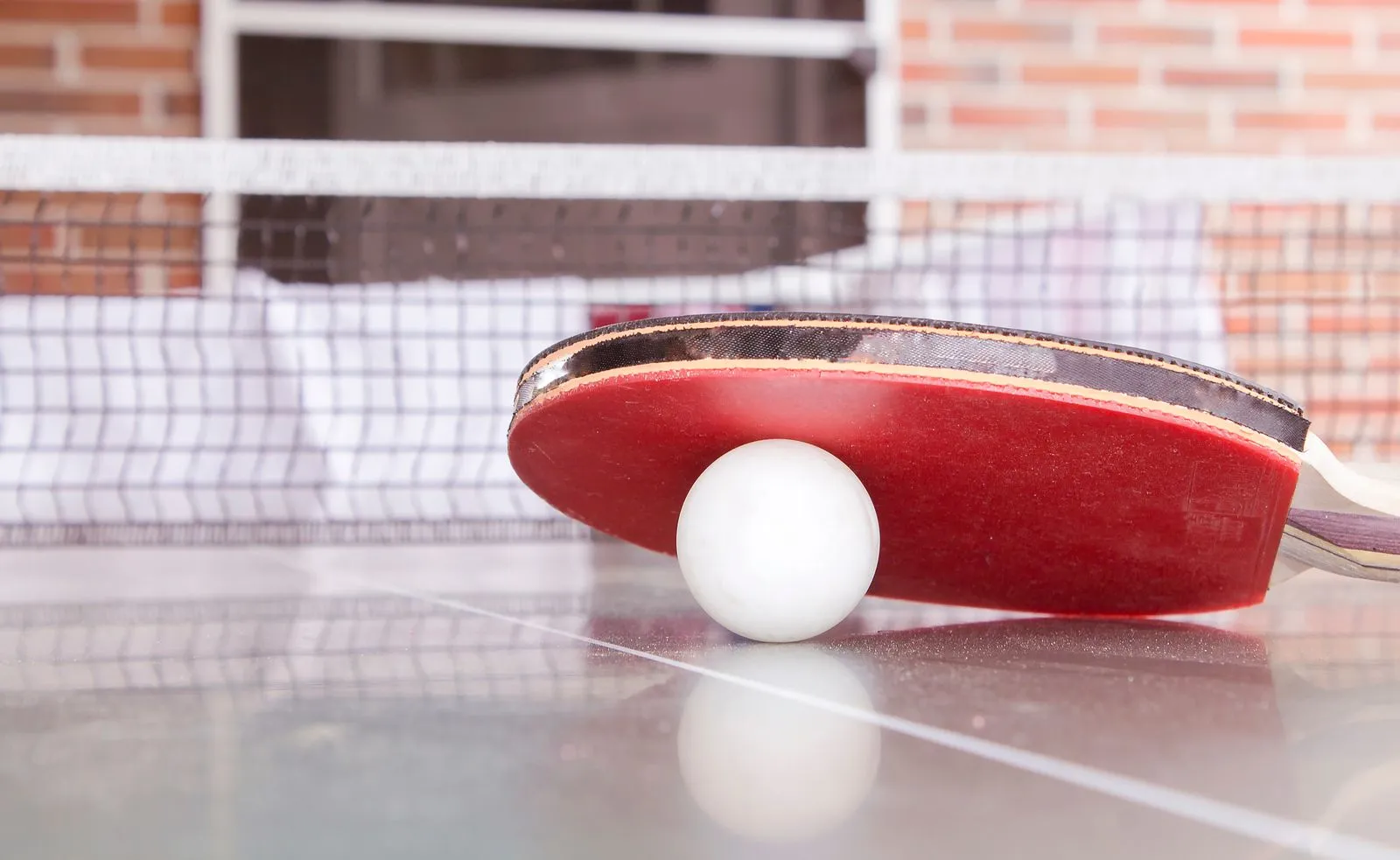
A table tennis night is one of the easiest events to put on, and one of the easiest to let slide into chaos. Eight people, two tables, and no plan, and you spend the evening arguing about who plays next instead of playing.
This guide walks through running a proper tournament, from the first decision to the final handshake: choosing a format, working out tables and timing, seeding the draw, scoring on the night, and sharing the results. It works for a club night, an office social, or a school event, whether you have eight players or eighty.
1. Choose a format that fits your players
The format decides everything else: how long the night runs, how many matches each player gets, and how much a single bad result hurts. Start here.
- Groups then knockout. Split players into groups of three or four for a round-robin, then the top finishers go into a knockout. The most common club format: everyone gets several matches, and it still ends in a real final.
- Straight round-robin. Everyone plays everyone. The fairest format and great for small fields (up to about eight), but the match count grows quickly, so it gets long with bigger numbers.
- Single-elimination knockout. Lose once and you're out. Quick and dramatic, but half the field is done after one match, so it suits larger fields or tight schedules more than a social night.
- Ladder. An ongoing challenge format where players climb by beating those above them. Good for a club that plays across weeks rather than one evening.
- Doubles. Any of the above with pairs instead of singles. A good leveller when players are mixed ability.
2. Work out tables and timing
Two numbers decide whether your night finishes on time: how many matches the format produces, and how long each match takes.
A single best-of-five match runs about fifteen to twenty minutes once you include the knock-up and the gaps between games. Best-of-seven adds roughly another ten. Count on the longer end for evenly matched players.
Then divide by your tables, because matches play in parallel: four tables clear four matches at once.
- Worked example: 16 players, 4 tables, groups of four. The group stage is 24 matches (six per group, four groups). At four tables and fifteen minutes a match, that's about ninety minutes, plus a knockout of around an hour. Budget two and a half to three hours.
- If that runs long, shrink the groups, drop to best-of-three for the early rounds, or add a table.
3. Seed and draw
Seeding keeps the strongest players apart in the early rounds, so the best matches happen at the end and not in round one.
Rank players by whatever you know: club rating, last event, or a quick estimate. Then spread the top seeds across different groups in snake order (seed one in group A, seed two in group B, and so on, then back the other way). In a knockout, give the top seeds the byes when your field isn't a power of two.
If you have no idea of standard, a random draw is fine. It's a social night, not a world ranking.
4. Score it on the night
This is where paper and a single scorekeeper fall apart. The moment two tables finish at once, someone is hunting for a pen.
Keep the night moving by letting the players at the table score their own match. In PingPong Arena you share an account-less scorer link: anyone with the link picks a free table and taps the score on their phone, with no app to install and no account to create. Several people can score different tables at the same time, and a mistaken point is one tap to undo.
Whoever is organising watches the whole event from one screen as results come in, instead of copying scores off scraps of paper.
5. Keep everyone in the loop
Players spend more of a tournament waiting than playing. Tell them where they stand and who they play next, and the whole night feels organised.
Put the standings somewhere everyone can see. PingPong Arena gives you a shareable live view and a read-only report link that update as matches finish, so waiting players can check their group, the bracket, and who's up next from their own phone. If you have a spare screen, you can put the live scoreboard on it too.
6. Finish and share the results
When the final is done, the tournament should leave something behind: a clear set of standings and a record players can look back on.
Share the final report link and everyone sees the standings, the bracket, and their own results. Each player gets a record with their matches and head-to-head history, so the regulars can track how they've done against the same rivals over time.
Common mistakes to avoid
- Too many knockout byes. A field of nine forces seven byes in the first round and looks lopsided. Use groups, or pick a field closer to a power of two.
- Underestimating time. Always add a buffer. Matches run long, players arrive late, and the final deserves a crowd, not a rush.
- No clear next match. The fastest way to stall a night is a finished table sitting empty. Make sure players can see who's up next.
- Best-of confusion. Decide best-of-five or best-of-seven up front and say so. Changing it mid-event causes arguments.
Common questions
How many players do you need for a tournament?
As few as four makes a proper round-robin where everyone plays everyone. There's no real upper limit: a giant round-robin or a groups-into-knockout format handles fields of fifty or more. The format matters more than the number.
What's the best format for a club night?
Groups of three or four into a knockout. Everyone gets several matches in the group stage, nobody travels in just to play once and go home, and the night still builds to a real final.
How long does a table tennis tournament take?
Budget about fifteen to twenty minutes per best-of-five match, divided by the number of tables. A 16-player event on four tables runs roughly two and a half to three hours including a knockout.
Do players need an account or an app to take part?
No. Only the organiser needs an account, and that's free. Players join, score, and see results through shared links in any web browser, with nothing to install.
Can more than one person keep score?
Yes. With a scorer link, several people can score different tables at the same time from their own phones, which is what keeps a busy night moving.