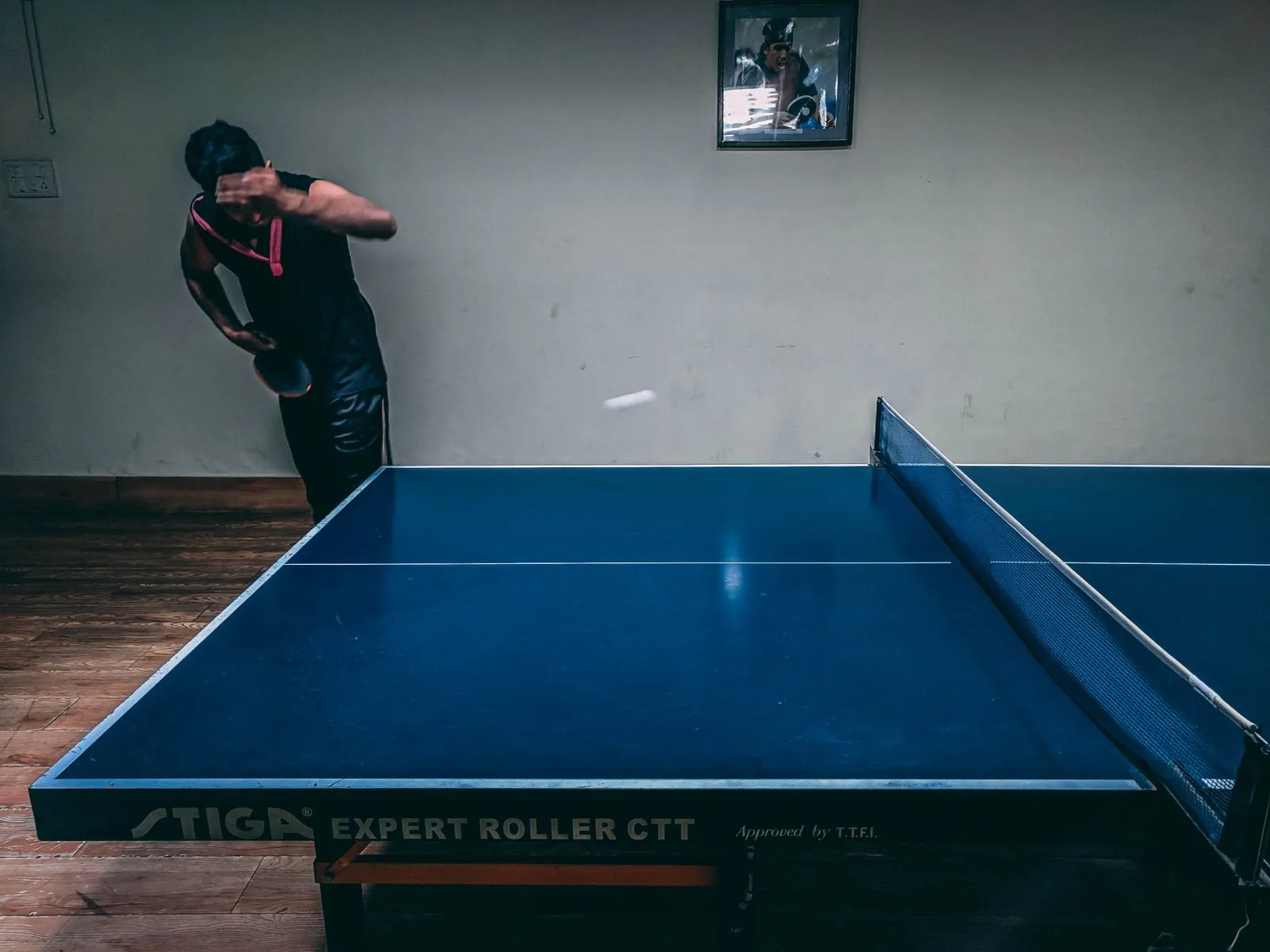
Table tennis looks gentle from the outside, but a few rallies in and your heart is going, your feet are moving, and your brain is reading spin and placement faster than you can put into words. It is one of the rare sports that works the body and the mind at the same time, and it stays playable from childhood well into later life.
This guide looks at what regular play can do for you: the physical side, the mental and cognitive side, the social and mood benefits, and why so many people keep playing into old age. It is general information, not medical advice, so check with a doctor before starting any new exercise if you have health concerns.
A full-body workout that is easy on the joints
A point in table tennis is short and sharp, then you reset and go again. That stop-start rhythm makes it both aerobic and anaerobic: your heart rate climbs in bursts during long rallies and settles between points, much like interval training. A busy session can leave you as warm and out of breath as a brisk walk or a light jog.
What sets it apart is how much it asks of your coordination rather than raw strength. You are tracking a fast, spinning ball, adjusting your feet, and timing a precise return, all in a fraction of a second. Over time that can sharpen hand-eye coordination, reflexes, balance and agility. And because there is no hard running, jumping or contact, it stays low-impact and relatively gentle on the knees, hips and back, which is part of why it suits such a wide range of ages and fitness levels.
- Aerobic and anaerobic: short bursts of effort with brief recovery, similar in feel to interval work.
- Coordination and reflexes: constant tracking, timing and quick adjustments may improve hand-eye coordination over time.
- Balance, agility and footwork: small, fast movements and weight shifts keep the lower body and core engaged.
- Low-impact: gentle on the joints compared with running or jumping sports, so it suits beginners, older players and people easing back into exercise.
A workout for the brain too
Every rally is a stream of fast decisions: where is the ball going, how is it spinning, where should I move, what shot do I play. You are reading your opponent and reacting in well under a second, again and again. That demand on anticipation, attention and quick decision-making is part of what makes the sport so absorbing, and players often describe feeling mentally sharp and clear-headed after a game.
Researchers have taken an interest in these effects. Studies have explored links between table tennis and cognitive function, reaction time and focus, and the sport has been used in research and programmes around brain and neurological health, including healthy ageing and conditions such as Parkinson's disease. The findings are promising rather than conclusive, so it is fair to say regular play has been associated with cognitive benefits, but not to treat it as a proven cure or treatment for any condition.
- Fast anticipation and decision-making under time pressure engage attention and processing speed.
- Regular play has been associated with sharper focus and quicker reaction times.
- Table tennis has been studied in the context of brain and neurological health, including healthy ageing and Parkinson's research.
- Treat these as areas researchers are exploring, not as medical claims or guarantees.
Better mood and lower stress
Like most exercise, table tennis can be a reliable way to lift your mood and take the edge off a stressful day. The pace helps: it is hard to stew on your inbox when you are concentrating on a fast rally, and the physical effort itself is a well-known way to release tension.
There is a focus benefit as well. Because the game demands your full attention, it can pull you into the present and give your mind a genuine break from whatever else is going on, which many people find calming and restorative.
A sport you can play for life
Plenty of sports are hard to keep up as you get older. Table tennis is not one of them. Because it rewards skill, timing and reading the game more than youth or raw athleticism, people often play well, and competitively, into their seventies, eighties and beyond. The low-impact nature means the body can keep tolerating it long after running or contact sports become difficult.
That matters for healthy ageing. Staying physically active and staying socially connected are both well established as part of ageing well, and table tennis happens to deliver both in one activity: gentle, regular movement alongside company and friendly competition. None of this guarantees anyone a specific number of extra years, but a low-impact, social, lifelong sport is about as friendly to long-term health as a hobby gets.
- Skill-based rather than purely athletic, so standard holds up well with age.
- Low-impact, so the joints tolerate years of regular play.
- Combines movement and social contact, both linked with ageing well.
Getting the benefits safely
You do not need to play hard to gain from table tennis, you need to play regularly. A couple of relaxed sessions a week will do far more over a year than the occasional all-out effort, and consistency is what builds the coordination and fitness gains.
A little care up front keeps it enjoyable and injury-free. Warm up before you start, build up gradually if you are new or returning after a break, and listen to your body rather than pushing through pain. As above, this is general information and not medical advice, so if you have any health concerns it is worth a quick word with your doctor before you begin.
- Warm up first: a few minutes of light movement and easy knock-up loosens the shoulders, wrists and legs.
- Start gently: ease in if you are new or coming back, and increase intensity over weeks, not minutes.
- Play regularly: short, frequent sessions beat rare, intense ones for steady gains.
- Stay hydrated and stop if something hurts; persistent pain is a reason to rest and seek advice.
Common questions
Is table tennis a good workout?
Yes. The stop-start rhythm of rallies makes it both aerobic and anaerobic, so a busy session raises your heart rate in bursts and can leave you as warm and out of breath as a brisk walk. On top of the cardio, it works coordination, reflexes, balance and footwork, all without the hard impact of running or jumping.
Is table tennis good for your brain?
It is mentally demanding in a good way: every rally asks for fast anticipation, attention and split-second decisions. Studies have explored links between table tennis and cognitive function, reaction time and focus, and the sport has featured in research around brain health and healthy ageing. These are areas researchers are still investigating, so it is best seen as a brain-engaging activity rather than a proven treatment.
Is table tennis good for older adults?
It suits older players particularly well. It is low-impact and gentle on the joints, it relies on skill and timing more than raw athleticism, and it combines gentle movement with social contact, all of which fit well with ageing actively. Many people keep playing happily into their seventies and eighties. As always, anyone with health concerns should check with a doctor before starting.
How often should I play to see benefits?
Regularly beats intensely. A couple of relaxed sessions a week, kept up over months, will build coordination and fitness far more than the occasional hard match. Consistency is the key, so pick a routine you can actually stick to, such as a standing weekly game.
Is table tennis low-impact and safe for the joints?
Compared with running, jumping or contact sports, yes. There is no heavy pounding and no collisions, so it is relatively gentle on the knees, hips and back, which is why it suits beginners and older players. Warming up, easing in gradually and stopping if something hurts keep it safe; this is general guidance, not medical advice.
Social connection and routine
Table tennis is rarely a solitary activity. You need someone to play, and most people get their games at a club, an office table or a regular evening with friends. That built-in social side is one of its quiet strengths.
Turning up to the same club night each week gives you company, friendly rivalry and a routine to look forward to, all of which support mental wellbeing. Strong social connection and a regular sense of belonging are widely recognised as good for mood and overall health, and a weekly game is an easy, low-pressure way to keep both going.